The Loyalty Illusion: How 'Free' Rewards Programs Are Engineered to Spend Your Money for You
Few words in consumer finance carry as much persuasive weight as the word "free." Free cash back. Free rewards points. A free night at a hotel after ten stays. A free $200 bonus just for opening a checking account. These offers are ubiquitous, enthusiastically marketed, and widely accepted as genuine benefits. But at PaRiFi, we believe financial literacy requires looking past the surface of any offer — particularly one that asks you to change your behavior in exchange for something described as having no cost.
The rewards economy is not a charity. It is a precisely engineered system designed to increase consumer spending, reduce price sensitivity, and build brand dependency. Understanding how it works does not mean avoiding all rewards programs — some genuinely deliver value. It means knowing exactly when you are the beneficiary and when you are the product.
Why Banks and Retailers Offer Rewards at All
The starting point for any analysis of loyalty programs is the question of incentive. Why would a financial institution give you $200 for opening a bank account, or a retailer offer you 5% back on every purchase?
The answer lies in the economics of consumer behavior. Research in behavioral economics has consistently demonstrated that loyalty programs accomplish several things for the businesses that offer them:
They increase spending. A landmark study published in the Journal of Marketing Research found that consumers enrolled in loyalty programs spend, on average, 15 to 25 percent more with the sponsoring brand than they did before enrolling. The act of accumulating points creates a psychological pull toward the brand — a phenomenon researchers call the "endowed progress effect."
They reduce price sensitivity. When consumers believe they are earning rewards on every purchase, they are less likely to compare prices or seek alternatives. The perceived value of accumulating points partially offsets the discomfort of paying a higher price.
They generate data. Every transaction linked to a loyalty account is a data point. Retailers and financial institutions use this information to refine marketing, personalize promotions, and predict purchasing behavior — capabilities worth substantially more than the rewards they distribute.
They create switching costs. Once a consumer has accumulated a significant balance of airline miles, hotel points, or credit card rewards, the psychological cost of switching to a competing product increases. This is not accidental — it is the design.
The True ROI of Common Rewards Programs
To evaluate whether a rewards program is working for you or against you, it is necessary to calculate its actual return — not its advertised return.
Credit Card Cash Back
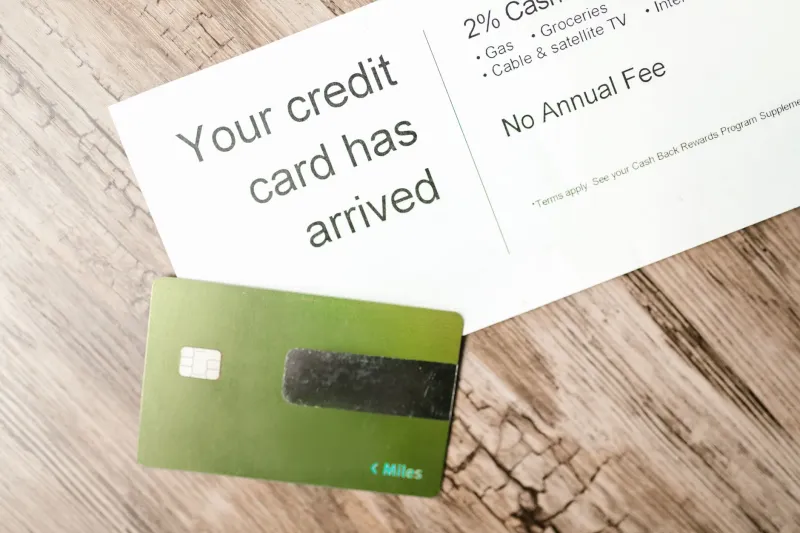
A card offering 2% cash back on all purchases sounds straightforward. On $20,000 in annual spending, that is $400 in rewards. But consider the full picture:
- The average American household carrying a credit card balance pays approximately $1,000 or more in annual interest charges. A 2% cash-back rate on $20,000 in spending is entirely eliminated — and then some — by a single month of carrying a balance at a 24% APR.
- Cash-back cards frequently carry higher annual fees, foreign transaction fees, or less favorable terms than non-rewards alternatives.
- Studies have found that consumers using rewards credit cards spend, on average, 12 to 18 percent more than they would with cash or debit. If $20,000 in credit card spending would have been $17,500 in cash spending, the "2% reward" was funded by $2,500 in additional spending — a net loss.
The genuine value of a cash-back card exists only for households that pay their balance in full every month and would have made the same purchases regardless of the card in their wallet. That profile describes a minority of American cardholders.
Bank Account Sign-Up Bonuses
Bank account bonuses — typically ranging from $100 to $500 for meeting direct deposit or minimum balance requirements — are among the more straightforward offers in the rewards landscape, but they carry their own hidden costs.
Most bonuses require maintaining a minimum balance to avoid monthly fees. A $200 bonus tied to a $1,500 minimum balance requirement at an institution paying 0.01% interest costs you the difference between that rate and what you would have earned in a high-yield savings account. At current high-yield rates of approximately 4.5 to 5%, keeping $1,500 in a low-yield account for 12 months costs roughly $67 in foregone interest — reducing your effective bonus to $133.
Additionally, bank bonuses are typically treated as taxable income, reported on a 1099-INT form. A $200 bonus for a household in the 22% federal bracket generates a $44 tax liability, bringing the net value to approximately $89 to $133 depending on the minimum balance terms.
This is not to say bank bonuses are never worthwhile — they can be, particularly for households who would maintain the required balance regardless. But the advertised value is rarely the realized value.
Airline Miles and Hotel Points
Frequent flyer and hotel loyalty programs are the most complex — and most frequently misunderstood — category of rewards. Their value is deliberately opaque, and the rules governing redemption are subject to change without notice.
The average value of an airline mile varies significantly by program and redemption type, but industry analysts typically estimate it at between 1 and 1.5 cents per mile. A credit card offering "3x miles on travel" on a $500 airline ticket generates approximately 1,500 miles worth $15 to $22.50 in redemption value — a return of 3 to 4.5% on that transaction.
However, mile valuations are based on optimal redemptions. Research by consumer finance organizations suggests that the average American redeems miles at roughly 60 to 70% of their theoretical maximum value, due to blackout dates, seat availability restrictions, and the tendency to redeem for lower-value options out of convenience. The practical return on most airline miles programs is closer to 1 to 2% — comparable to a basic cash-back card, but with significantly less flexibility.
Which Programs Actually Deliver Value
Not all loyalty programs are traps. Some offer genuine, measurable returns for the right consumer profile.
Simple, flat-rate cash-back cards held by households that pay balances in full every month and spend within their existing budget are among the most straightforward value propositions in consumer finance. The key is behavioral discipline — the card must not change what you spend, only what you earn on spending you would have made anyway.
Employer-sponsored programs such as FSA or HSA accounts with employer contributions represent genuine, tax-advantaged rewards with no behavioral manipulation attached.
Utility and service loyalty programs — such as those offered by some insurance providers for safe driving or preventive health behaviors — reward behaviors that are independently beneficial, making the alignment between the consumer's interest and the institution's interest more genuine.
A Framework for Evaluating Any Rewards Offer
Before enrolling in a new program or product on the basis of its rewards, apply three questions:
- Will this change how much I spend? If the answer is yes — even marginally — the program is working against you.
- What is the net return after fees, taxes, and opportunity costs? Calculate the realized value, not the advertised value.
- What is the exit cost? If leaving the program means forfeiting accumulated value, you have already been partially captured by the switching-cost mechanism.
Financial empowerment is not about avoiding all rewards programs. It is about engaging with them on your terms, with clear eyes and accurate math — rather than on the terms of the institution that designed them.