Small Spending, Giant Consequences: The Lifetime Math Behind Your Everyday Financial Choices
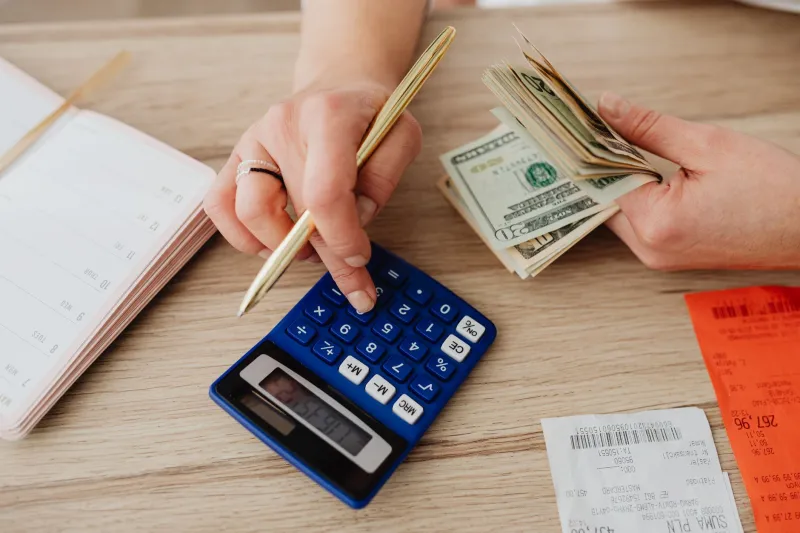
Most Americans think about money in the present tense. A $6 latte is just a $6 latte. A $15 premium car wash is a reasonable indulgence. Paying full retail price instead of waiting for a sale feels like a minor convenience. Individually, none of these decisions seem consequential. Collectively, they represent one of the most powerful — and most overlooked — forces shaping your financial future.
At PaRiFi, we believe that genuine financial literacy means understanding not just what you spend, but what you surrender when you spend it. That distinction is the foundation of what economists call opportunity cost — the value of what you give up by choosing one option over another. When you apply that concept to decades of compounding investment returns, the numbers become difficult to ignore.
The Compounding Effect: A Brief Primer
Before examining specific spending habits, it is important to understand why time transforms small numbers into large ones. When money is invested, it earns returns. Those returns are then reinvested, earning returns of their own. Over long periods, this process — compound growth — turns modest contributions into substantial wealth.
A straightforward example: $100 invested today at an average annual return of 7% (a conservative approximation of long-term stock market performance, adjusted for inflation) becomes approximately $761 in 30 years. That means every $100 you choose not to invest costs you roughly $661 in future wealth — not just the $100 itself.
With that framework in place, consider how quickly your daily habits begin to look very different.
The Coffee Calculation
The coffee example has become something of a cliché in personal finance circles, but the underlying arithmetic remains valid. Consider the difference between brewing coffee at home — averaging about $0.50 per cup — versus purchasing a specialty drink at a café for an average of $6.50.
That $6 daily difference amounts to $2,190 per year. Invested consistently over 30 years at 7% annual returns, that single habit change accumulates to approximately $220,000.
For a 25-year-old earning $45,000 annually, that figure represents nearly five years of gross income. For someone in their 40s who has not yet prioritized retirement savings, it illustrates how much runway still exists — and how much is being quietly surrendered every morning.
This is not an argument against enjoying coffee. It is an argument for understanding the trade-off and making the choice deliberately.
Premium Products and the Prestige Premium
Beyond coffee, American consumers routinely pay a prestige premium on everyday goods — premium gasoline in vehicles that do not require it, name-brand over-the-counter medications with identical active ingredients to generic alternatives, and brand-name pantry staples that cost 30 to 50 percent more than store-brand equivalents.
Consider gasoline. The average American driver purchases approximately 656 gallons of gas per year. The price difference between regular and premium fuel typically ranges from $0.20 to $0.60 per gallon. For a driver whose vehicle does not require premium fuel — which describes the majority of American cars — choosing premium unnecessarily costs between $131 and $394 annually with no mechanical benefit.
At the midpoint of that range, roughly $260 per year invested over 25 years at 7% grows to approximately $17,500. A modest number, perhaps, but one that comes entirely from a habit with zero functional benefit.
Generic medications tell a similar story. The FDA requires generic drugs to meet the same standards for safety, efficacy, and quality as their brand-name counterparts. Yet Americans spend billions more annually on branded versions. A household that spends $50 per month on name-brand medications versus $20 for generics is leaving $360 per year on the table — which compounds to roughly $36,000 over 30 years.
Retail Timing and the Sale Cycle
Retail pricing in the United States follows predictable patterns. Major appliances go on sale during holiday weekends. Clothing is marked down seasonally. Electronics drop in price around Black Friday and at end-of-product-cycle moments. Grocery stores rotate sale cycles on staples roughly every six to eight weeks.
Consumers who understand and leverage these cycles — without falling into the trap of buying things they do not need simply because they are discounted — can reduce their annual household spending meaningfully. Research from the Consumer Expenditure Survey suggests that strategic shoppers spend 10 to 15 percent less on comparable goods than their counterparts who purchase at full price.
For a household spending $30,000 annually on discretionary and semi-discretionary goods, a 12% reduction represents $3,600 per year. Invested over 20 years at 7%, that sum grows to approximately $148,000.
This is not about deprivation. It is about timing and intentionality.
Income Level Matters — But Perhaps Not the Way You Think
A common misconception is that these calculations only matter for high earners who have significant disposable income to redirect. In reality, the percentage impact of habitual overspending is often more pronounced at lower and middle income levels.
Consider two individuals:
- Person A earns $38,000 per year and spends $250 per month on avoidable premium costs.
- Person B earns $95,000 per year and spends $250 per month on the same avoidable costs.
For Person A, that $3,000 per year represents nearly 8% of gross income. For Person B, it represents just over 3%. Both individuals lose the same absolute dollar amount in future wealth — approximately $302,000 over 35 years at 7% — but the relative sacrifice and potential lifestyle impact of redirecting those funds is far greater for Person A.
This is precisely why financial literacy cannot be a luxury reserved for the affluent. The mathematical stakes are highest for those with the least margin for error.
The Aggregation Problem
Perhaps the most important insight in this analysis is what happens when multiple small inefficiencies operate simultaneously. Most households do not have just one premium habit — they have dozens. The specialty coffee and the premium gas and the brand-name groceries and the full-price retail purchases and the unused gym membership.
When these habits are aggregated, the annual opportunity cost for a typical middle-income American household can easily reach $5,000 to $10,000. Over a 30-year working career, at a 7% return, $7,500 per year in redirected spending grows to approximately $756,000.
That is the difference, for many Americans, between a comfortable retirement and a financially precarious one.
Reclaiming the Invisible Wealth Tax
None of this requires extreme frugality or a dramatic lifestyle overhaul. The goal is awareness — understanding that every financial choice carries a future-value implication, and that small decisions made consistently over decades have consequences that dwarf their apparent size.
Practical starting points include:
- Audit one spending category per month. Identify where you are paying a premium without a meaningful benefit.
- Calculate the 30-year value of any recurring expense. Multiply the annual cost by a compound growth factor (roughly 7.6 for 30 years at 7%) to see the retirement-value equivalent.
- Separate emotional spending from habitual spending. Choosing a premium product because it genuinely improves your quality of life is a legitimate financial decision. Choosing it out of inertia is not.
- Redirect, do not simply cut. The goal is not to reduce spending for its own sake, but to redirect dollars from low-value habits to investment accounts, emergency funds, or debt reduction.
Financial empowerment does not begin with a windfall or a promotion. It begins with understanding the true cost of the choices you are already making — and deciding, deliberately, which ones are worth it.
The invisible wealth tax is real. But unlike most taxes, this one is entirely within your power to reduce.