The Three-Digit Number That Quietly Decides How Much You Pay for Almost Everything
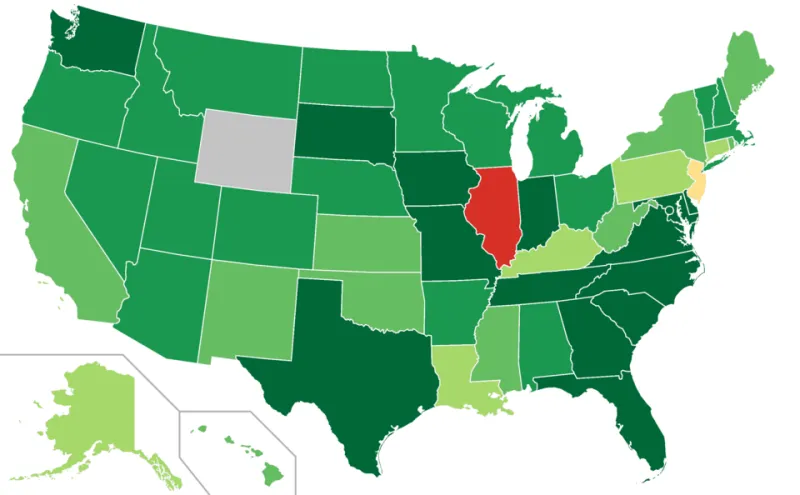
Photo: Szmenderowiecki, CC BY-SA 4.0, via Wikimedia Commons
Most Americans understand, in a general sense, that a low credit score makes borrowing more expensive. What far fewer people recognize is how deeply that three-digit figure reaches into everyday life — well beyond the walls of a bank or mortgage lender's office. Your credit score quietly shapes the price of your car insurance, the deposit you hand over to a utility company, whether a landlord accepts your rental application, and in some states, whether a prospective employer even considers you for a position.
This is not a hypothetical concern. It is a measurable, ongoing cost that compounds over years and decades. For millions of Americans sitting in the "fair" credit range — scores between 580 and 669 — the financial penalty is substantial and largely invisible. At PaRiFi, our mission is to make that cost visible, and to help every reader understand exactly which steps move the needle and which popular strategies simply waste time.
How Lenders Use Your Score — and Why the Rate Difference Is Larger Than You Think
The most direct consequence of a mediocre credit score is the interest rate attached to borrowed money. On a 30-year fixed mortgage, the difference between an excellent score (760 and above) and a fair score (around 620) can translate to an interest rate gap of one and a half to two full percentage points. On a $300,000 loan, that gap costs roughly $90,000 to $110,000 in additional interest over the life of the loan.
Auto loans follow a similar pattern. A borrower with strong credit might secure financing at 5 percent, while someone with a fair score may face rates of 12 to 15 percent on the same vehicle. Over a five-year loan term, the difference in total payments can easily exceed $5,000 — enough to cover months of groceries or a meaningful contribution to an emergency fund.
The Insurance Premium Nobody Warned You About
Perhaps the most overlooked dimension of credit-based pricing is insurance. In most U.S. states, auto and homeowners insurance companies are legally permitted to use a credit-based insurance score — a variation of your standard credit score — to set your premiums. The correlation insurers cite is statistical: lower credit scores are associated with a higher likelihood of filing claims.
The practical effect is significant. Drivers with poor credit can pay anywhere from 50 to 100 percent more for the same auto coverage than drivers with excellent credit, according to research from consumer advocacy organizations. For a policy that costs a creditworthy driver $1,200 annually, a driver with poor credit might pay $1,800 to $2,400 — a difference of $600 to $1,200 every single year, simply because of their score.
Homeowners insurance follows similar logic. California, Massachusetts, and Hawaii are among the few states that restrict or prohibit this practice, but residents in the remaining 47 states are subject to credit-influenced pricing without always knowing it.
Utility Deposits and the Cost of Establishing Service
When you move into a new apartment or home and call the utility company to set up electricity, gas, or water service, the provider will often run a soft credit inquiry. If your score falls below a certain threshold, they may require a security deposit — sometimes equal to one or two months of estimated service charges — before activating your account.
For someone moving into a new place who already faces first and last month's rent plus a standard security deposit, an additional utility deposit of $150 to $400 per provider can create genuine financial strain. This is money tied up rather than available for building savings or covering other transition costs.
Rental Housing and the Landlord's Scorecard
Landlords across the country routinely pull credit reports as part of their tenant screening process. Many set firm minimum score requirements — commonly 620 to 650 — and will reject applicants who fall below that threshold regardless of their rental history or income level.
For applicants who do get approved despite a lower score, the terms often reflect the perceived risk. Landlords may require a larger security deposit, additional months of rent paid upfront, or a co-signer. In competitive rental markets like New York, Los Angeles, or Chicago, a weak credit profile can effectively limit your housing options to a smaller, less desirable pool of available units.
Employment Screening: A Less Common but Real Consequence
Approximately 25 percent of employers conduct credit checks as part of their hiring process, according to surveys from the Society for Human Resource Management. This practice is most prevalent in roles involving financial responsibility, government security clearances, or access to sensitive information.
Eleven states — including California, Colorado, Illinois, and New York — have enacted laws restricting or banning credit checks for employment purposes. But in states without such protections, a damaged credit history can cost an applicant a job offer, creating a troubling paradox: financial hardship leads to credit damage, which then makes it harder to earn the income needed to recover.
What Actually Improves Your Score — and What Doesn't
With so much at stake, credit improvement advice circulates widely — and much of it is either misleading or counterproductive. Here is a grounded breakdown of what genuinely works.
Payment history carries the most weight. Approximately 35 percent of your FICO score is determined by whether you pay your bills on time. Setting up automatic minimum payments on every account prevents the single most damaging event: a missed payment reported to the credit bureaus.
Credit utilization matters more than most people realize. Utilization — the ratio of your current balances to your total available credit — accounts for roughly 30 percent of your score. Keeping this ratio below 30 percent is widely recommended, but those seeking the highest scores often aim for below 10 percent. Paying down revolving balances is one of the fastest ways to see measurable improvement.
Age of credit accounts works in your favor over time. Closing old credit cards — even ones you no longer use — can shorten your average account age and raise your utilization ratio simultaneously. Unless an account carries an annual fee you cannot justify, leaving older accounts open is generally the better strategy.
Disputing inaccurate information is free and consequential. The Federal Trade Commission has found that roughly one in five Americans has an error on at least one of their credit reports. Errors can include accounts that do not belong to you, incorrect late payment notations, or outdated derogatory marks. You are entitled to free copies of your reports from all three major bureaus at AnnualCreditReport.com, and disputing errors costs nothing.
What does not help as much as advertised: Rapid rescoring services offered through mortgage brokers have limited scope. Paying a credit repair company to remove accurate negative information is rarely effective — and the fees can be substantial. Likewise, simply applying for new credit to "build" your profile can temporarily lower your score through hard inquiries.
Treating Credit as a Financial Asset
The most productive reframe is to stop thinking of your credit score as a grade and start treating it as an asset — one that either earns you financial advantages or quietly levies costs across nearly every corner of your economic life. A score improvement from 620 to 750 does not just feel good; it translates into lower insurance premiums, smaller deposits, better rental options, and potentially tens of thousands of dollars in reduced borrowing costs over a lifetime.
Financial literacy means understanding that the work of improving your credit is not about impressing a lender. It is about reclaiming money that a mediocre score is already taking from you — month after month, often without your awareness. That is a cost worth addressing directly, and the tools to do so are available to every American willing to look.